
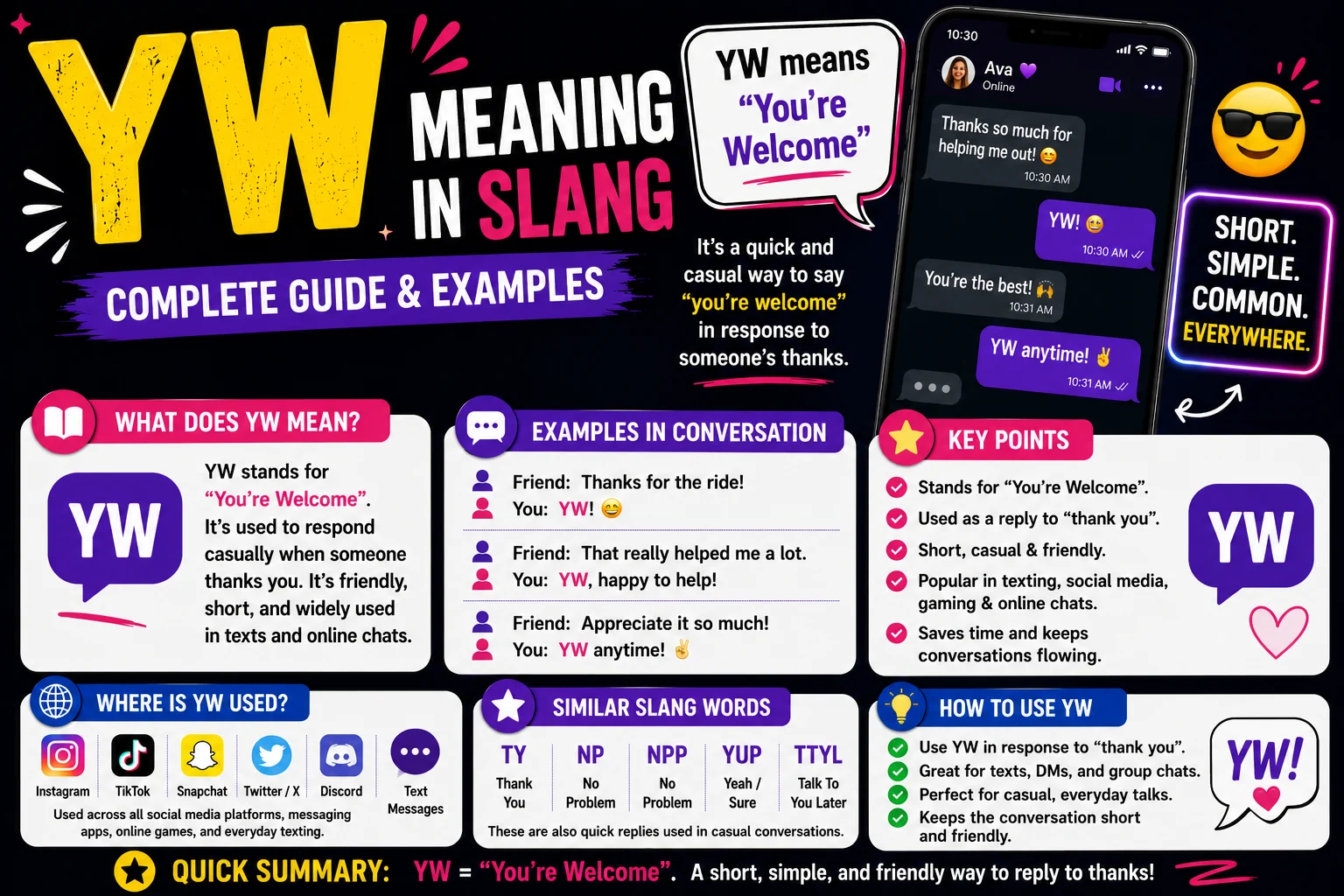
If you’ve ever thanked someone in a text message and received “YW” in reply, you may have wondered what it means. YW is one of the most common internet abbreviations, and people use it every day in chats, social media, and messaging apps.
Because online conversations move quickly, many users shorten common phrases into acronyms. YW is a perfect example of this trend.
In this guide, you’ll learn what YW means in slang, how people use it in texting and social media, and examples from everyday conversations.
What Does YW Mean in Slang?
In texting and internet slang, YW stands for “You’re Welcome.” People use it as a quick response after someone says “thank you.”
For example:
- Person 1: “Thanks for helping me.” Person 2: “YW!”
- Person 1: “Thank you for the advice.” Person 2: “YW.”
- Person 1: “Thanks for sending the photos.” Person 2: “YW 😊”
In these examples, YW is simply a shorter version of “You’re welcome.”
YW Meaning in Text Messages
YW is extremely popular in text conversations because it saves time and keeps chats casual.
Examples in Text
Friend 1: “Thanks for picking me up.”
Friend 2: “YW!”
Friend 1: “Thank you for sharing your notes.”
Friend 2: “YW, anytime.”
Friend 1: “Thanks for the recommendation.”
Friend 2: “YW!”
Most of the time, YW is used in a friendly and polite way.
YW Meaning on Snapchat
On Snapchat, YW commonly appears in chats and private messages.
Examples:
- “Thanks for the Snap!” “YW!”
- “Thanks for reminding me.” “YW 😊”
- “Appreciate your help.” “YW.”
Since Snapchat conversations are usually fast and informal, abbreviations like YW are very common.
YW Meaning on TikTok and Instagram
On TikTok, Instagram, and X, YW may appear in comments and direct messages.
Examples:
- “Thanks for the tutorial!” “YW!”
- “Thanks for answering my question.” “YW.”
- “Thanks for the tip.” “YW!”
People often use YW because it is short, polite, and easy to type.
Can YW Have Other Meanings?
Although “You’re Welcome” is the most common meaning, YW can occasionally stand for other things depending on the context.
| Meaning | Example |
|---|---|
| You’re Welcome | “Thanks!” — “YW.” |
| Yeah, whatever | Rare internet usage |
| Youth worker | Used in professional contexts |
| Yearly wage | Used in finance |
In texting and social media, however, “You’re welcome” is by far the most common meaning.
Is YW Polite?
Yes, YW is generally considered polite in casual conversations. It is a friendly way to acknowledge someone’s gratitude.
However, because it is informal, some people may prefer to write the full phrase in professional settings.
Casual Situations
- Text messages.
- Group chats.
- Social media comments.
- Conversations with friends.
Formal Situations
In emails or workplace communication, writing “You’re welcome” in full is usually more professional.
Similar Texting Abbreviations
If you understand YW, you may also encounter these common abbreviations:
- TY — Thank you
- NP — No problem
- NVM — Never mind
- BRB — Be right back
- IDK — I don’t know
- TBH — To be honest
- TTYL — Talk to you later
These shortcuts help people communicate faster online.
Why Is YW So Popular?
YW remains popular because it is:
- Short and easy to type.
- Friendly and polite.
- Common across many platforms.
- Easy for most people to understand.
- Useful in everyday conversations.
As texting culture continues to evolve, abbreviations like YW remain an important part of online communication.
FAQs
What does YW mean in slang?
YW stands for “You’re welcome.”
What does YW mean in texting?
In texting, YW is a short way of saying “You’re welcome.”
What does YW mean on Snapchat?
On Snapchat, YW usually means “You’re welcome” and is commonly used in chats.
Is YW rude?
No. YW is generally polite, although it may sound too casual in formal situations.
Final Thoughts
YW is one of the most common abbreviations used in texting and social media. Most often, it stands for “You’re welcome” and is used as a quick response after someone says “thank you.”
Whether you see it on Snapchat, TikTok, Instagram, or in a group chat, understanding YW makes online conversations easier to follow.