
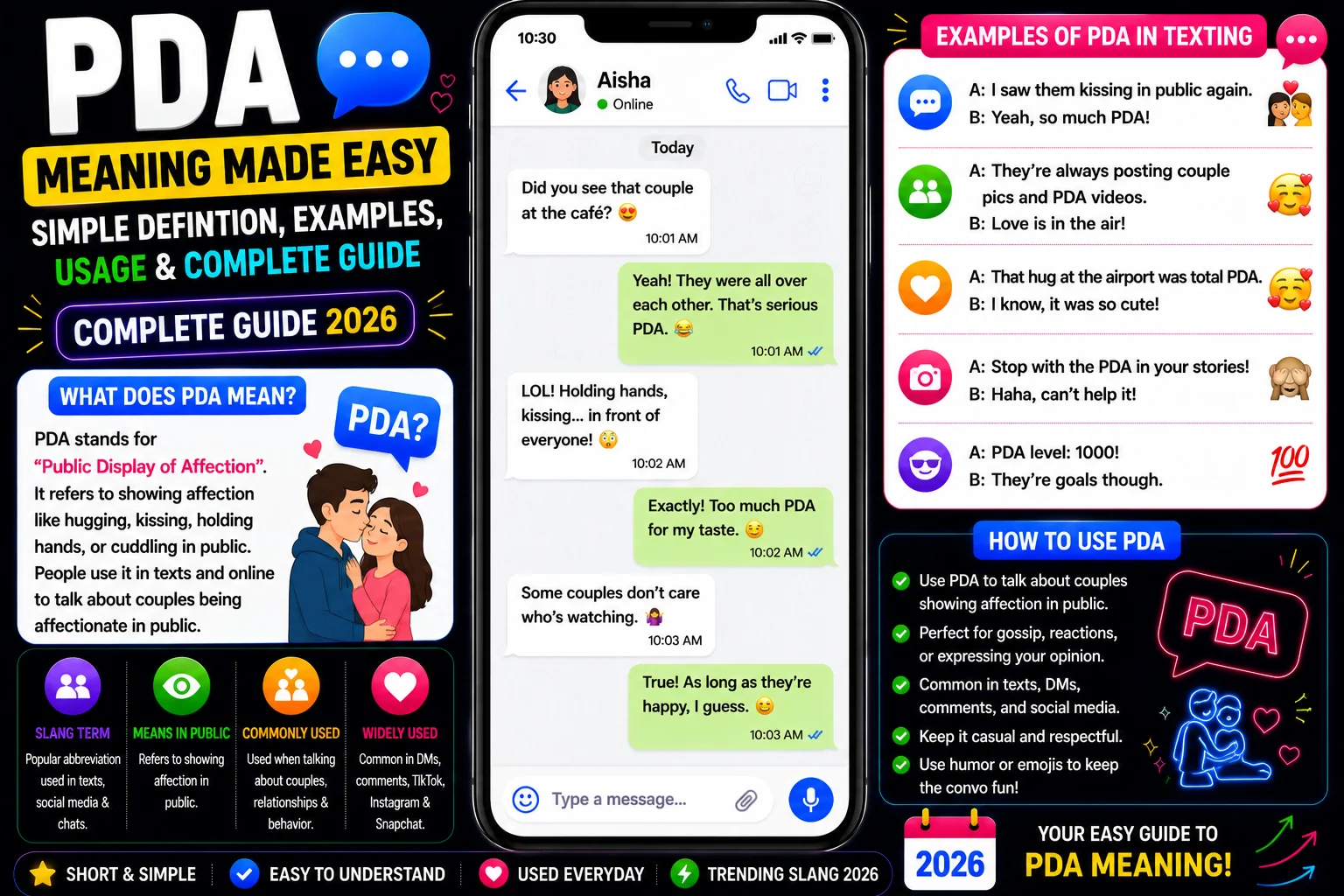
Discover the meaning of PDA in dating, texting, and social media. Learn what Public Display of Affection means, see examples, etiquette tips, and FAQs.If you’ve ever heard someone say “They’re showing too much PDA” or seen “No PDA please!” in a social media comment, you might wonder what PDA actually means.
PDA stands for “Public Display of Affection.” It refers to romantic or affectionate behavior between couples in public places. These displays can range from holding hands and hugging to kissing or cuddling.
The term is widely used in text messages, dating conversations, TikTok videos, Instagram captions, Snapchat chats, movies, and everyday discussions. While some people see PDA as a sweet expression of love, others believe certain types of public affection should remain private.
This guide explains everything you need to know about PDA, including its meaning, examples, social media usage, dating etiquette, cultural differences, and frequently asked questions.
What Does PDA Mean?
PDA is short for Public Display of Affection.
It describes any romantic gesture that takes place where other people can see it.
These gestures may include:
- Holding hands
- Hugging
- Kissing
- Cuddling
- Putting an arm around a partner
- Holding someone’s waist
- Gentle forehead kisses
- Walking arm in arm
In simple words, PDA means showing affection toward your romantic partner in public.
What Does PDA Mean in Texting?
In text messages, people often use PDA while talking about relationships or discussing how affectionate a couple is.
For example:
Emma: Did you see Jake and Mia at the mall?
Olivia: Yes! Lots of PDA.
Alex: Do you like holding hands in public?
Ryan: A little PDA is fine with me.
Sophia: My boyfriend hates PDA.
Emily: Everyone has different comfort levels.
In texting, PDA usually refers to affectionate behavior that happens outside the privacy of home.
PDA Meaning in Dating
When discussing relationships, PDA refers to how comfortable a couple is with expressing affection in front of other people.
Some couples enjoy showing affection openly, while others prefer to keep romantic moments private.
Examples of dating PDA include:
- Holding hands during a walk
- Hugging goodbye
- A quick kiss before leaving
- Resting your head on your partner’s shoulder
- Walking arm in arm
- Holding each other during a concert
Many relationship experts believe healthy PDA can strengthen emotional connections when both partners are comfortable with it.
PDA Meaning on TikTok
TikTok has made the term PDA even more popular.
You’ll often find creators making videos such as:
- “Rating couples based on their PDA.”
- “POV: Your partner loves PDA.”
- “My boyfriend refuses PDA.”
- “Too much PDA 😂”
Relationship influencers also discuss:
- Healthy relationship habits
- Public affection
- Dating advice
- Relationship boundaries
Many comments include:
“That’s adorable PDA.”
or
“Way too much PDA for me.”
PDA Meaning on Instagram
Instagram users commonly mention PDA in:
- Couple photos
- Vacation pictures
- Anniversary posts
- Wedding content
- Relationship reels
Example captions include:
- “Little PDA never hurt anyone ❤️”
- “Caught showing PDA again.”
- “Weekend date with my favorite person.”
Followers may comment:
- “Cute couple!”
- “Relationship goals.”
- “Love the PDA.”
PDA Meaning on Snapchat
On Snapchat, PDA is often mentioned while sharing:
- Selfies with a partner
- Date night photos
- Couple videos
- Romantic moments
Examples include:
- “Too much PDA 😂”
- “Movie night ❤️”
- “PDA alert!”
- “Couple goals.”
Examples of PDA
Public displays of affection come in many forms.
Some common examples include:
Holding Hands
One of the most common and socially accepted forms of PDA.
Hugging
Greeting or saying goodbye with a hug.
Kissing
Quick kisses are generally considered mild PDA.
Long or passionate kissing may be viewed differently depending on the location.
Cuddling
Sitting close together or leaning against each other in public.
Arm Around the Shoulder
Many couples naturally walk this way.
Forehead Kiss
Often viewed as a sweet and affectionate gesture.
Different Levels of PDA
Not every public display of affection is viewed the same way.
Mild PDA
These are generally accepted in many public settings.
Examples:
- Holding hands
- Brief hugs
- Quick kisses
- Walking arm in arm
Moderate PDA
These behaviors are more intimate.
Examples:
- Long hugs
- Sitting on each other’s lap
- Prolonged kissing
- Constant cuddling
Excessive PDA
Some people may find certain behaviors inappropriate in public.
Examples include prolonged or highly intimate physical contact.
Whether something is considered excessive depends on the location, culture, and people around you.
Is PDA Good or Bad?
There isn’t a universal answer.
It depends on:
- Personal preferences
- Cultural expectations
- Religious beliefs
- Age
- Environment
- Respect for others
Some people enjoy seeing affectionate couples.
Others feel uncomfortable with public displays of romance.
Neither opinion is automatically right or wrong.
The key is mutual respect and awareness of your surroundings.
Benefits of PDA
Healthy public affection may have several benefits.
Shows Affection
Simple gestures remind your partner they are appreciated.
Builds Emotional Connection
Holding hands or hugging can strengthen intimacy.
Creates Security
Some partners feel more emotionally connected through affectionate gestures.
Increases Happiness
Small displays of affection may boost positive feelings in a relationship.
Expresses Love Naturally
For many couples, affectionate behavior simply feels natural.
When Should You Avoid PDA?
Although PDA is common, there are situations where it may not be appropriate.
Consider avoiding excessive PDA in:
- Professional workplaces
- Business meetings
- Religious locations
- Formal ceremonies
- Schools
- Courtrooms
- Hospitals
- Funerals
Being aware of the environment helps maintain respect for others.
PDA Around the World
Attitudes toward PDA vary greatly across cultures.
In some countries, couples frequently hold hands and kiss in public.
In others, even holding hands may be considered too intimate.
If you’re traveling internationally, it’s a good idea to learn about local customs before showing public affection.
Why Do Some People Dislike PDA?
There are many reasons.
Some people:
- Prefer private romance.
- Feel shy.
- Were raised differently.
- Come from cultures where PDA is uncommon.
- Simply don’t enjoy public attention.
Likewise, some people love PDA because it helps them feel emotionally connected.
Every relationship is different.
Common Phrases Related to PDA
You’ll often hear expressions like:
- “No PDA.”
- “Too much PDA.”
- “They love PDA.”
- “PDA isn’t my thing.”
- “Keep the PDA to a minimum.”
- “Cute PDA moment.”
- “Public PDA.”
These phrases appear frequently in relationship discussions online.
Similar Dating Terms
If you’re learning relationship slang, you may also come across:
Situationship
A romantic relationship without official labels.
Sneaky Link
A secret romantic or casual relationship.
Ship
Supporting two people as a couple.
Bae
A boyfriend, girlfriend, or loved one.
OTP (One True Pairing)
A fan’s favorite fictional or real-life couple.
Love Language
The preferred way someone expresses and receives affection.
FAQs
What does PDA stand for?
PDA stands for Public Display of Affection.
What is considered PDA?
Holding hands, hugging, kissing, cuddling, or other romantic gestures performed in public.
Is holding hands PDA?
Yes.
Holding hands is one of the most common and socially accepted forms of PDA.
Is PDA good for relationships?
For many couples, yes.
If both partners are comfortable with it, PDA can strengthen emotional bonds and help express affection.
What does “No PDA” mean?
It means someone prefers not to show romantic affection in public.
Is PDA appropriate everywhere?
No.
Certain places, such as workplaces, religious sites, hospitals, and formal events, may call for more reserved behavior.
Why do people enjoy PDA?
Some couples feel it helps them express love, build closeness, and show appreciation naturally.
Why do some people avoid PDA?
Personal comfort, cultural values, privacy, or respect for public settings are common reasons.
Final Thoughts
PDA, or Public Display of Affection, refers to romantic gestures that couples share in public, such as holding hands, hugging, kissing, or cuddling. It is a widely used term in texting, dating, TikTok, Instagram, Snapchat, and everyday conversations.
While opinions on PDA vary, the most important factor is that both partners feel comfortable and respectful of each other’s boundaries. What feels natural for one couple may not feel right for another, and that’s perfectly normal.
Whether you enjoy a simple handhold during a walk or prefer to keep affection private, understanding the meaning of PDA helps you navigate modern relationships and social conversations with confidence.