
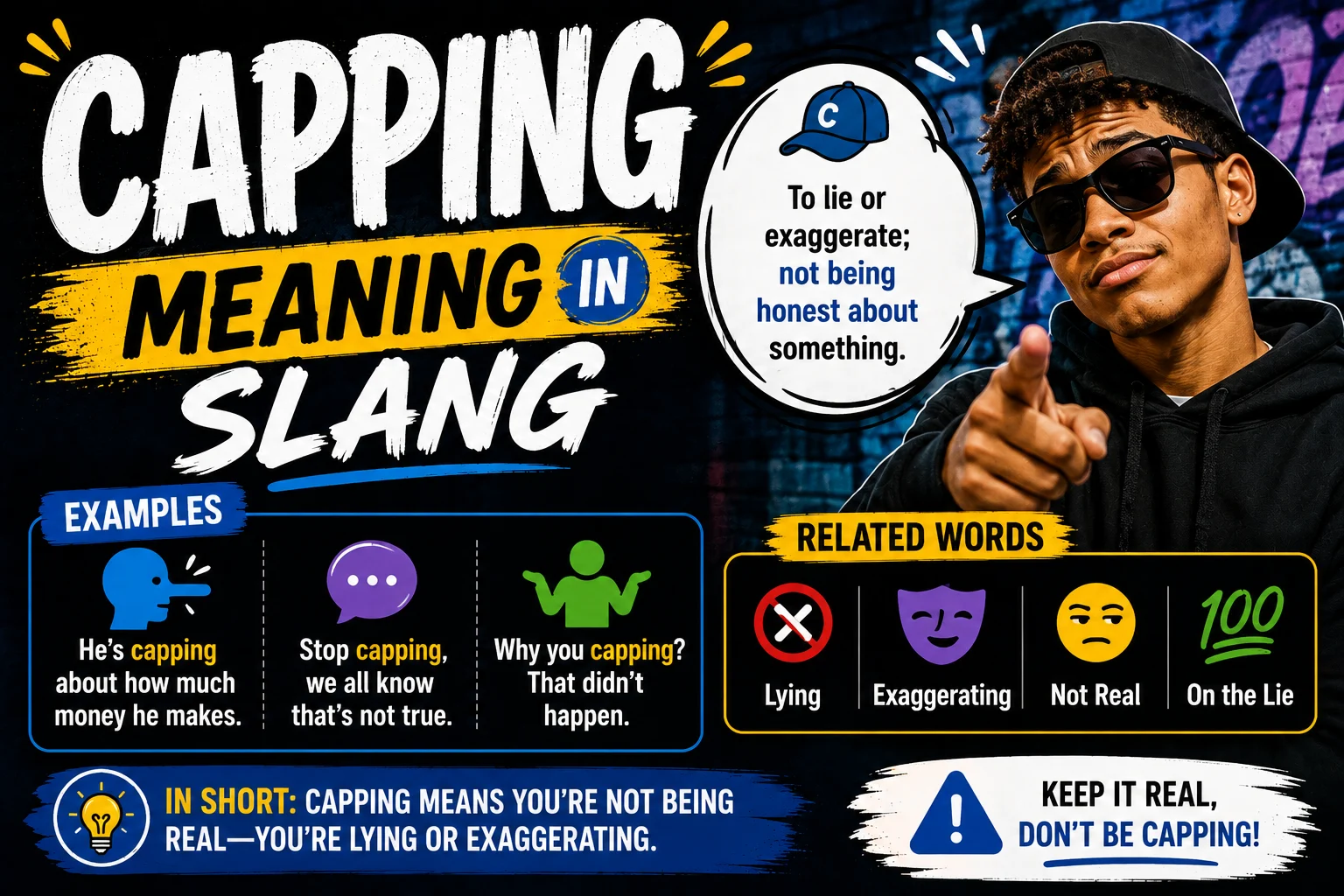
The slang term “capping” is one of the most popular expressions used on TikTok, Snapchat, Instagram, X (formerly Twitter), and in text messages. In modern slang, capping means lying, exaggerating, or saying something that isn’t true.
If someone says “You’re capping,” they’re accusing you of being dishonest or stretching the truth. The opposite phrase is “no cap,” which means “I’m telling the truth.”
In this guide, you’ll learn what capping means in slang, how it’s used online, and see real-life examples.
What Does “Capping” Mean in Slang?
In modern slang, capping means:
- Lying.
- Exaggerating.
- Making false claims.
- Pretending something is true when it isn’t.
Examples
- “You’re capping.”
- “Stop capping.”
- “He’s capping about how much money he makes.”
- “Don’t cap to impress people.”
What Does “No Cap” Mean?
No cap is the opposite of capping.
It means:
- I’m telling the truth.
- I’m being honest.
- Seriously.
- For real.
Example
“I’m the fastest runner here, no cap.”
Meaning: I’m serious I’m not exaggerating.
Capping Meaning in Text Messages
People often use capping to call out a lie or exaggerated statement.
Examples in Text
Friend 1: “I finished the whole game in one hour.”
Friend 2: “You’re capping.”
Meaning: I don’t believe you.
Friend 1: “I met my favorite singer yesterday.”
Friend 2: “Stop capping 😂.”
Meaning: You’re probably lying.
Friend 1: “No cap, the pizza was amazing.”
Meaning: I’m honestly saying it was great.
Capping Meaning on TikTok
On TikTok, capping appears in:
- Comedy videos.
- Storytimes.
- Reaction clips.
- Memes.
- Challenges.
Examples:
- “POV: Your friend keeps capping.”
- “Stop the cap.”
- “He’s definitely capping.”
- “No cap, this is the best trend.”
The phrase is especially common in comment sections where users question whether a story is true.
Common Slang Phrases with Capping
“You’re Capping”
Meaning:
You’re lying or exaggerating.
Example:
“You said you own three sports cars? You’re capping.”
“Stop Capping”
Meaning:
Stop lying.
Example:
“Stop capping we all know what happened.”
“Cap”
Meaning:
A lie or false statement.
Example:
“That’s cap.”
“No Cap”
Meaning:
I’m being completely honest.
Example:
“No cap, this movie deserves an award.”
Capping vs. No Cap
| Phrase | Meaning |
|---|---|
| Capping | Lying or exaggerating. |
| Cap | A lie or false statement. |
| No Cap | I’m telling the truth. |
Example
- “You’re capping.” → You’re lying.
- “That’s cap.” → That’s not true.
- “No cap.” → Honestly.
Is “Capping” Positive or Negative?
Generally, capping has a negative meaning because it suggests someone isn’t being truthful.
However, friends sometimes use it jokingly when teasing each other.
Similar Slang Terms
If you’re learning modern internet slang, you may also come across:
- No Cap – I’m telling the truth.
- FR – For real.
- NGL – Not gonna lie.
- BS – Nonsense or a lie.
- Fake – Not genuine.
- Gaslighting – Manipulating someone into doubting reality (a different concept, but sometimes confused with lying).
FAQs
What does “capping” mean in slang?
In slang, capping means lying, exaggerating, or making false claims.
What does “you’re capping” mean?
It means “you’re lying” or “I don’t believe you.”
What does “stop capping” mean?
It’s another way of saying “stop lying” or “stop exaggerating.”
What does “capping” mean on TikTok?
On TikTok, capping is commonly used to call out fake stories, exaggerated claims, or unbelievable statements.
Is “capping” the opposite of “no cap”?
Yes. Capping means lying, while no cap means you’re being truthful.
Final Thoughts
Capping is a popular internet slang term meaning lying, exaggerating, or making false claims. It’s widely used on TikTok, Instagram, Snapchat, and in text messages to question whether someone is telling the truth.
If someone says “You’re capping,” they’re saying they don’t believe you. If they reply with “No cap,” they’re emphasizing that they’re being honest.